
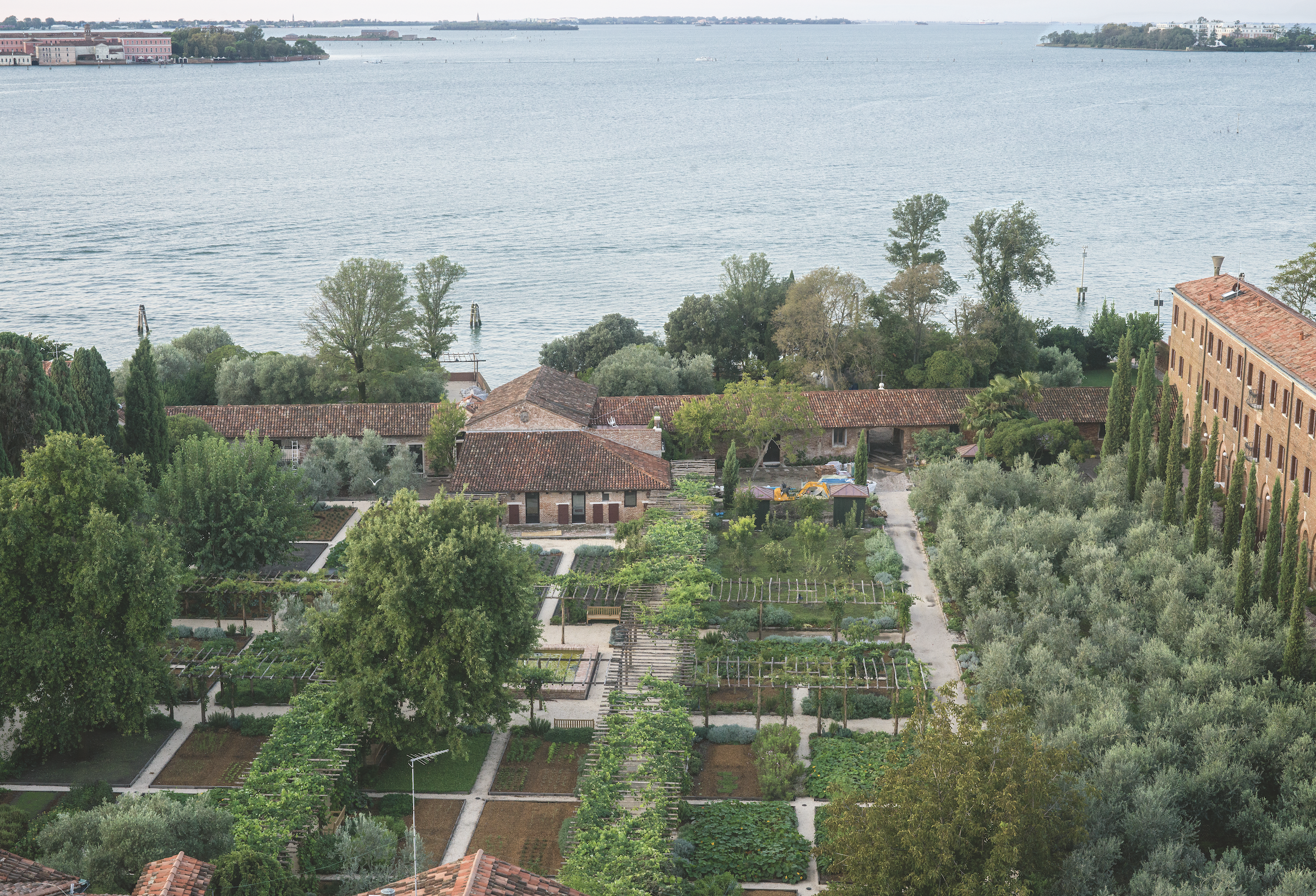
Restoration of the Convent Garden
The restoration of a garden entails not only commitment to safeguarding and protecting its botanical, artistic and architectural heritage, but also recognising the fundamental role that these sites play in a social and community context. The primary aim of such commitment is therefore to re-establish a transcendent relationship, one that is intimately connected to nature, and based upon affinity, harmony and respect. These principles and ideals are at the heart of Venice Gardens Foundation and its activities of restoration, care and conservation of the heritage entrusted to it, in order to safeguard their significance and beauty, in a spirit of gratitude towards the past, where it represents a source of knowledge and happiness, and of hope for the future.
Continuing its mission to protect nature and promote art and knowledge – the core values of patronage – after just over three years of work, in the autumn of 2024, the Foundation opened to the public the Convent Garden of the Church of the Most Holy Redeemer with its Old Workshops and Greenhouse. This historic and symbolic site, a high expression of Capuchin spirituality, extends for about a hectare from the Giudecca Canal to the lagoon. The garden complex is annexed to the church which was designed for the Serenissima by the renowned architect Andrea Palladio and entrusted to the Capuchins by Pope Gregory XIII as a symbol of rebirth after the plague of 1575-1577. Before it was opened to the public, the garden was visibly marked by the passage of time and by the acqua granda of November 2019, an exceptional high tide that reached 187 centimetres, flooding and devastating the city.
With the objective of restoring the site’s beauty, tradition and vision for the future, the Foundation conducted in-depth archival research and developed a project, entrusted to landscape architect Paolo Pejrone, in synchrony with the important tradition of convent gardens, their botanical richness and capacity for experimentation. This far-reaching commitment also involved the restoration of the site’s centuries-old buildings.